

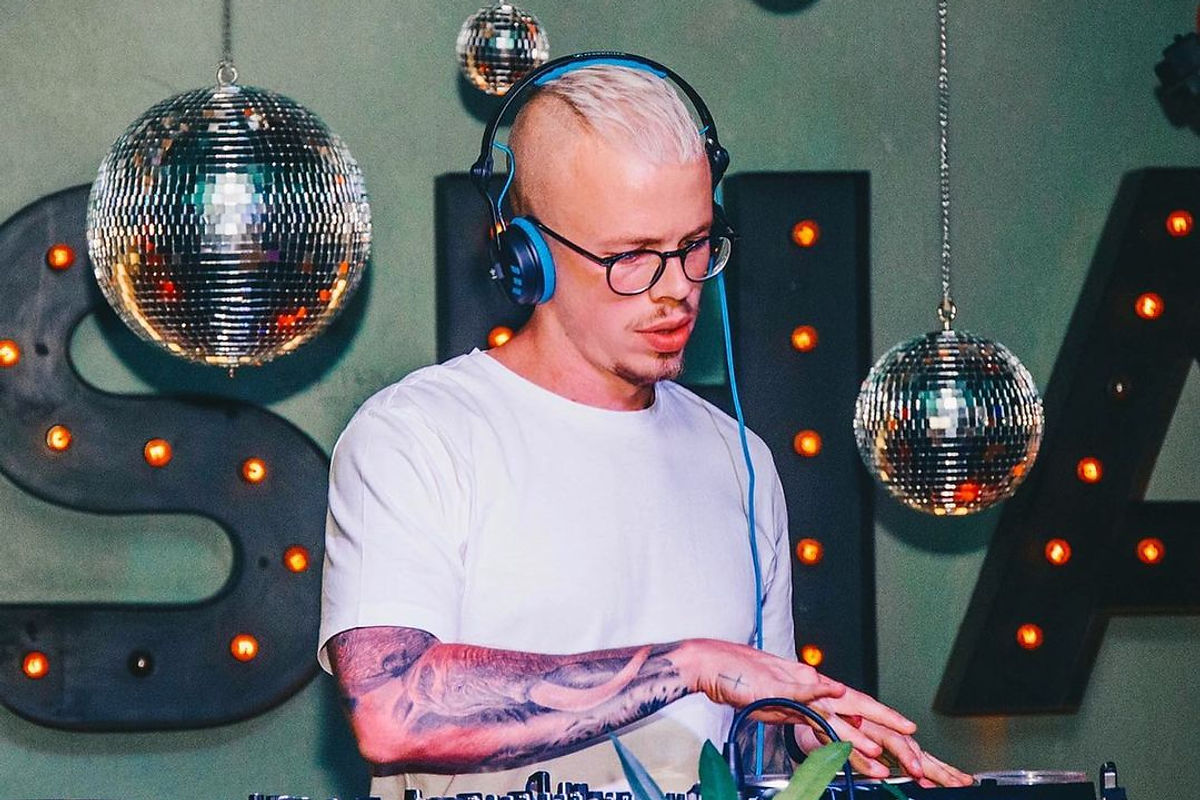
Aidin Caye is one of the unlucky few who can not use his mask as a disguise to avoid small talk in Spar. When you see him, you know it. The man’s got a trademark look and the beats to match.
The unique techno flavour of his music makes me forget I can’t dance - a quintessential sound he has honed over a decade of magic-making in the industry.
Aidin wants to make a mark with his music rather than follow trends. A choice he acknowledges is harder than it sounds. “There are very few people who can balance artistic credibility and integrity and what they want to do in their soul, and financial incentives,” he says.
Finding your middle ground is about making a decisive call on why you create. "You have to ask yourself: Am I doing this because I'm a purist and all I care about is the most underground, unique, groundbreaking stuff that nobody else can say they've done, or am I doing this because I want to make a living and I don't really care about the way people might judge it?”
Either decision has pros and cons; authentic creativity matters, but so does money. “If you want to make something that's super niche, you're ultimately going to have to find a niche that you can dominate to make money,” advises Aidin. “You might find a lot of artists that have made one song, and then you never hear from them again; they just make a lot of money and then they either can't recreate that, or they don't want to.”
His stance is about finding a balance, but never at the expense of his artistic integrity. “I find a middle ground between making money from what I'm doing and staying true to myself. The one thing I do know is that I have no interest in ever making something that I myself don't like.”
Deciding on your artistic identity as an artist in South Africa is all very well. Finding real success in the context of the South African music industry, however, is a unique challenge.
The revenue streams available to artists are severely impacted by several outside factors, and although there are meant to be mechanisms in place to assist artists, these are dubious at best. According to Aidin, the problem is systemic and complex. “The whole supply chain or the distribution of funds getting paid by the radio station, or the sponsor, or whatever it might be, doesn't actually trickle down to the artists.”
“If you make the song or you're the producer or do the singing itself, you should get an additional revenue stream from that music playing on the radio.” The Southern African Music Rights Association (SAMRO) should ensure this redistribution, but the organisation has long been plagued by ineptitude. “There's all of this back and forth bickering and the money gets stuck in bank accounts or misused,” explains Aidin. “Without there being some kind of union to leverage, there won't be any change because the people that have the influence are already at the table, whereas the people that don't have that kind of power are left to fend for themselves.”
“Until [artists] can come together collectively to be able to unite against the common enemy, nothing's going to change for them.”
In most cases, local artists who have been able to stay afloat over the last two years are those who had an additional income stream, say, royalties from radio. But a lot of people in Aidin’s immediate circle weren’t so lucky. “The artists who didn't have music on radio or a strong following on Spotify, for example, had their gigs taken away and then had nothing. They didn’t get support from the government.”
"I'm one of the people that didn't have a choice," says Aidin. "I had to basically give up on the idea that I could make music full time."
So what did Aidin do during lockdown? Well, a lot. He launched the Broke Not Broken campaign to raise awareness about the lack of institutional support experienced by South Africa’s music industry. Part of this campaign included the documentary The State of the Arts, featuring some of the nation’s most well-known voices - a must-watch for anyone who has ever listened to music and felt something.
Aidin’s not-for-profit effort raised enough funds to provide groceries for up to 40 families in the music industry. “It was really just an opportunity to talk to people that I knew were struggling and giving the rest of the industry the ability to, kind of, see that they're not going through it alone.”
Released in 2020, Connections is Aidin’s first complete album release, an authentic collection of beats that keeps you hooked from Track 1, and an impressive project to complete in the middle of a global pandemic.
He did learn lessons through this first experience. “The biggest mistake I made was releasing it during the number five lockdown,” he says. “There was so much going on in peoples’ minds that it just kind of got lost in the noise.” The fact that the album didn’t go as far as he’d hoped was hugely demotivating and a knock on Aidin’s self-esteem.
Regardless, the challenge of surviving 2020 made Aidin a better artist. “The fact that I actually finished nine songs and the process of learning involved in that was more valuable than if I'd gotten a million streams,” he reflects. Aidin released a total of 14 songs that year, launched The Garden Party event series in Johannesburg, and provided a significant platform for artists to express themselves and find support. “It was the most successful year I’ve had as an artist because there were all these other things that I could do that have some kind of influence and impact on people.”
Cautious optimism. That’s how Aidin feels about the future. “If we take what's happened in the last few years, I actually have no idea what's going to happen,” shrugs Aidin.
Luckily (for us), he and many of your favourite artists don’t need certainty to keep creating. They just need your support.
- Holly Charlton